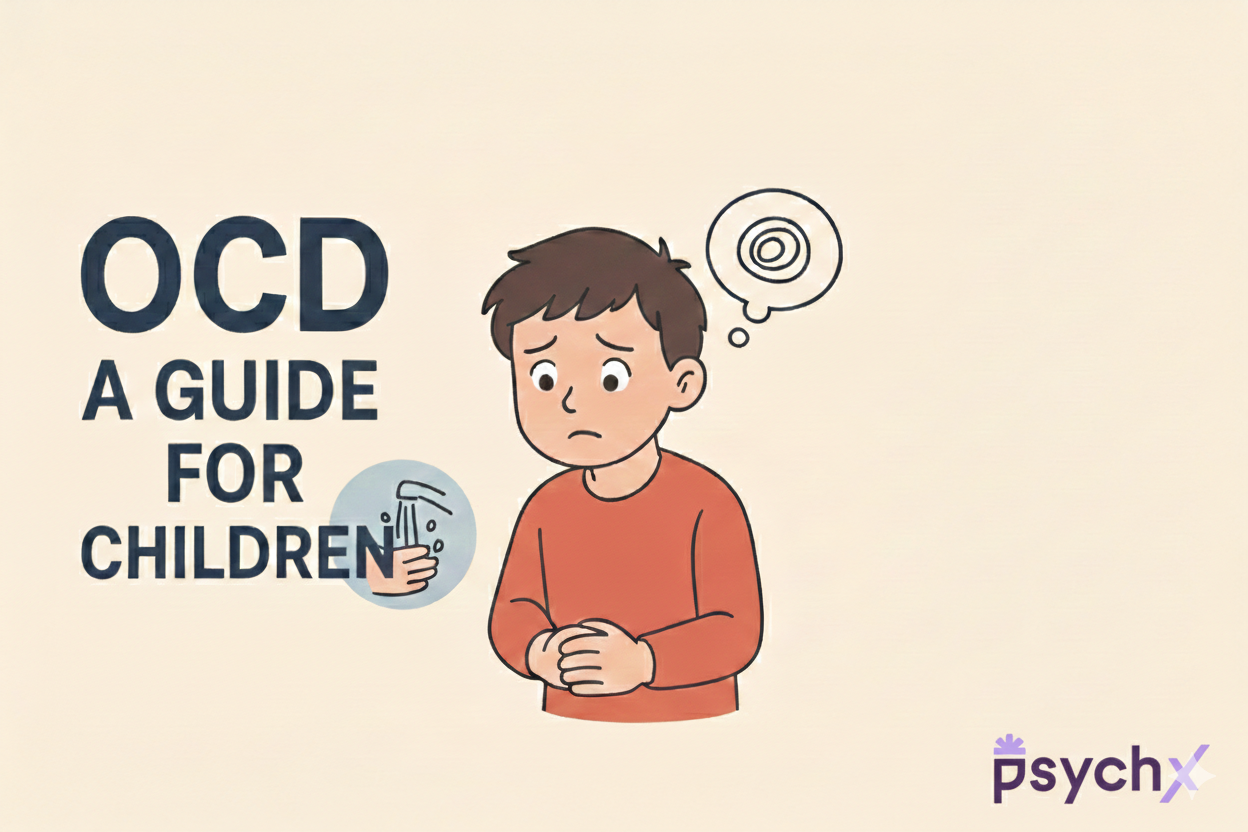
Understanding OCD: A Simple Guide for Kids
What Is OCD in Kids?
Obsessive-Compulsive Disorder (OCD) is a mental health condition where children experience unwanted, repetitive thoughts (obsessions) and feel driven to perform certain actions (compulsions) to ease their anxiety. These behaviours can interfere with daily life, school, and relationships.
Common Signs to Watch For
Excessive handwashing or cleaning
Repeated checking (e.g., doors, homework, lights)
Needing things to be “just right”
Asking for constant reassurance
Avoiding certain places or people due to fear
How to Support Your Child
1. Stay Calm and Curious
Avoid reacting with frustration. Instead, ask gentle questions like, “What’s going through your mind when that happens?”
2. Don’t Join the Rituals
It’s tempting to help your child feel better by participating in their compulsions, but this can reinforce the OCD cycle.
3. Validate Their Feelings
Say things like, “I know this feels really hard,” while gently encouraging them to face their fears.
4. Seek Professional Help
Cognitive Behavioural Therapy (CBT), especially Exposure and Response Prevention (ERP), is highly effective for OCD. A child psychologist or counsellor can guide this process.
5. Create a Supportive Routine
Structure and predictability help reduce anxiety. Include time for play, rest, and open conversations.
6. Celebrate Small Wins
Progress may be slow, but every step counts. Praise effort, not just outcomes.
Final Thought
OCD is not a result of poor parenting or misbehaviour. It’s a treatable condition, and with your support, your child can learn to manage their thoughts and feel more in control.
