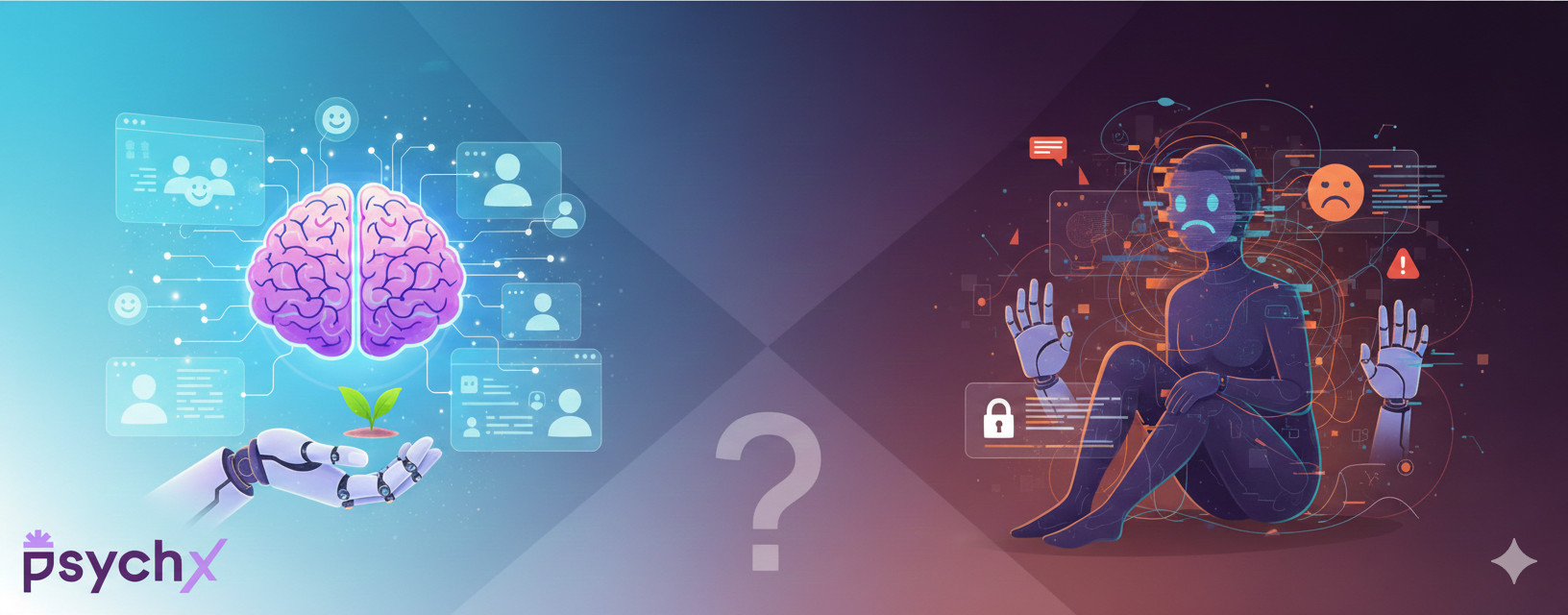
The Impact of AI on Mental Health Support: Opportunities and Challenges
Artificial Intelligence (AI) is increasingly influencing various sectors—including mental health. From AI-driven chatbots to predictive analytics, technology is offering innovative solutions to support emotional well-being.
Opportunities
Accessible Support
AI-powered chatbots provide immediate assistance, offering coping strategies and mental health resources to individuals in need.
Personalized Interventions
Machine learning algorithms analyze user data to tailor interventions, enhancing the effectiveness of mental health programs.
Early Detection
AI can identify patterns in behavior, speech, or digital activity that may signal mental health concerns, enabling proactive intervention.
Challenges
Privacy Concerns
Handling sensitive mental health data requires robust privacy protocols to protect user confidentiality and trust.
Lack of Human Touch
While AI can offer support, it cannot replicate the empathy, intuition, and relational depth of human therapists.
Bias in Algorithms
AI systems may unintentionally reflect biases present in their training data, potentially leading to unequal or inaccurate care.
Moving Forward
As AI continues to evolve, it’s crucial to balance technological innovation with ethical responsibility. Mental health support must remain inclusive, confidential, and human-centered—even as digital tools expand access and efficiency.
